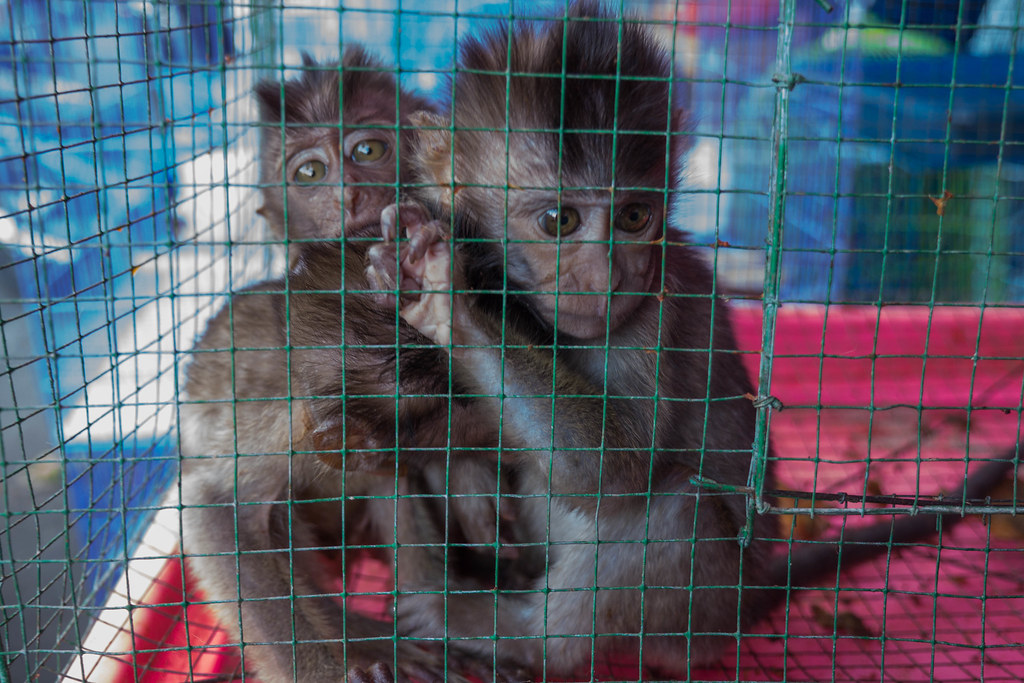
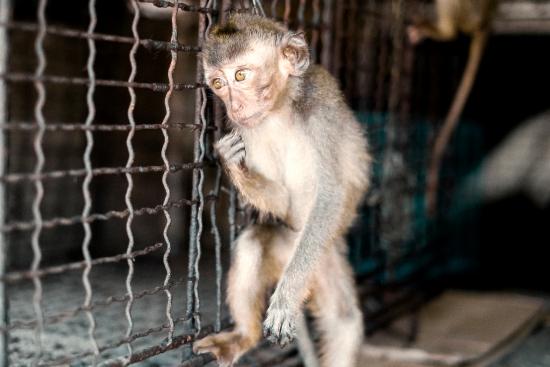
we see a young monkey sitting in a cage, a metal chain fastened around its small neck. Its eyes are wide and alert, yet filled with confusion and fear. This monkey was not born into this place of metal bars and cold restraints. It was born in the forest, surrounded by trees, fresh air, and—most importantly—its family. The moment it was captured, its life changed forever.
In the wild, monkeys live complex social lives. They are deeply emotional and intelligent animals that depend on their families for survival. From the moment they are born, baby monkeys cling to their mothers for warmth, safety, and nourishment. Mothers teach them how to find food, recognize danger, and interact with other members of their group. The forest is not just a home; it is a living classroom where every sound, movement, and interaction has meaning.
When this young monkey was taken from the forest, it was violently separated from everything it knew. Capture often involves fear and brutality. Hunters may chase the group, frightening adults and infants alike. In many cases, mothers are injured or killed while trying to protect their babies. For the baby monkey, the trauma begins in that moment—being torn from its mother’s arms, hearing distress calls fade into silence, and being forced into a world it cannot understand.
The cage in which this monkey now lives is a poor substitute for the forest. Instead of trees, there are metal bars. Instead of freedom, there is a chain. Instead of family, there is isolation. Monkeys are social animals, and loneliness can be devastating for them. Deprived of normal social interaction, many captive monkeys develop psychological problems such as depression, anxiety, and self-harming behaviors. What we see on the outside—a quiet or obedient animal—often hides deep suffering within.
The chain around the monkey’s neck is especially heartbreaking. It symbolizes control, ownership, and the loss of freedom. This animal did nothing wrong to deserve such treatment. Its only “crime” was being born beautiful, intelligent, and valuable in the eyes of humans who see animals as commodities rather than living beings. Whether the monkey is intended to be sold, displayed, or kept as a pet, the result is the same: a life of confinement and loss.
Keeping wild animals as pets is not only cruel but also dangerous. Wild animals are not meant to live in human homes or markets. They have natural instincts that cannot be erased, no matter how young they are when captured. As the monkey grows older and stronger, it may become stressed or aggressive, leading to punishment, further restraint, or abandonment. Many captive monkeys are eventually discarded when they are no longer “cute” or manageable.
Beyond the individual suffering of this monkey, there is a larger environmental cost. The illegal capture and trade of wildlife contribute to the destruction of ecosystems. When animals are removed from the wild, natural balances are disrupted. Monkeys play important roles in forests, such as spreading seeds and maintaining plant diversity. Taking them away harms not only the animals themselves but also the forests that depend on them—and ultimately, humans as well.
This image forces us to confront uncomfortable questions about our relationship with animals. Do we have the right to take freedom from another living being for entertainment, profit, or curiosity? Is our desire to possess or control worth the lifelong suffering of an innocent creature? Compassion demands that we see this monkey not as an object, but as an individual with feelings, memories, and a family that was lost.
There is still hope. Around the world, animal rescue organizations work tirelessly to save monkeys and other wildlife from captivity. When rescued, some monkeys can be rehabilitated and, if possible, returned to protected forest areas. Although the trauma of separation can never be fully erased, care, patience, and kindness can help them heal. More importantly, education and strong laws can prevent future suffering by stopping wildlife trafficking at its source.
The young monkey in this image cannot speak for itself, but its eyes tell a powerful story. They ask for empathy, for understanding, and for change. As humans, we have the ability—and the responsibility—to protect those who cannot protect themselves. By choosing compassion over cruelty and respect over exploitation, we can ensure that future generations of monkeys are born not into cages, but into the forests where they truly belong.